Pico 2 W Board Support + Current Design Photos
Added the Raspberry Pi Pico 2 W (RP2350) as a third target board alongside the original Pico W and ESP32-S3. The Pico 2 W is now the default development board for Dilder. Also captured photos of the current Rev 2 build running Sassy Octopus.
Pico 2 W — What Changed
The Pico 2 W has an identical 40-pin header to the Pico W, so it's a physical drop-in replacement. Same wiring, same display, same joystick. The differences are under the hood:
- RP2350 dual Cortex-M33 cores @ 150MHz (vs RP2040 Cortex-M0+ @ 133MHz)
- 4MB flash (vs 2MB)
- 520KB SRAM (vs 264KB)
- ARM TrustZone, secure boot, OTP
Gotchas We Hit
Three issues that weren't obvious from the datasheet:
BOOTSEL drive is RP2350, not RPI-RP2. Every script that looked for the RPI-RP2 USB mass storage label failed silently. Updated find_rpi_rp2_mount() in both the DevTool and setup CLI to search for both labels.
No hardware RTC. The RP2350 removed the Real-Time Clock peripheral entirely. hardware/rtc.h, datetime_t, and the rtc_*() functions don't exist. Created rtc_compat.h that provides a software fallback using time_us_64() on RP2350 while passing through to real hardware on RP2040.
CMake cache poisoning. If you built for pico_w and then switch to pico2_w, the cached PICO_PLATFORM=rp2040 causes a fatal error. Added auto-detection that wipes the build directory when the platform mismatches.
Current Design Photos
The Rev 2 enclosure running Sassy Octopus on a Pico 2 W:
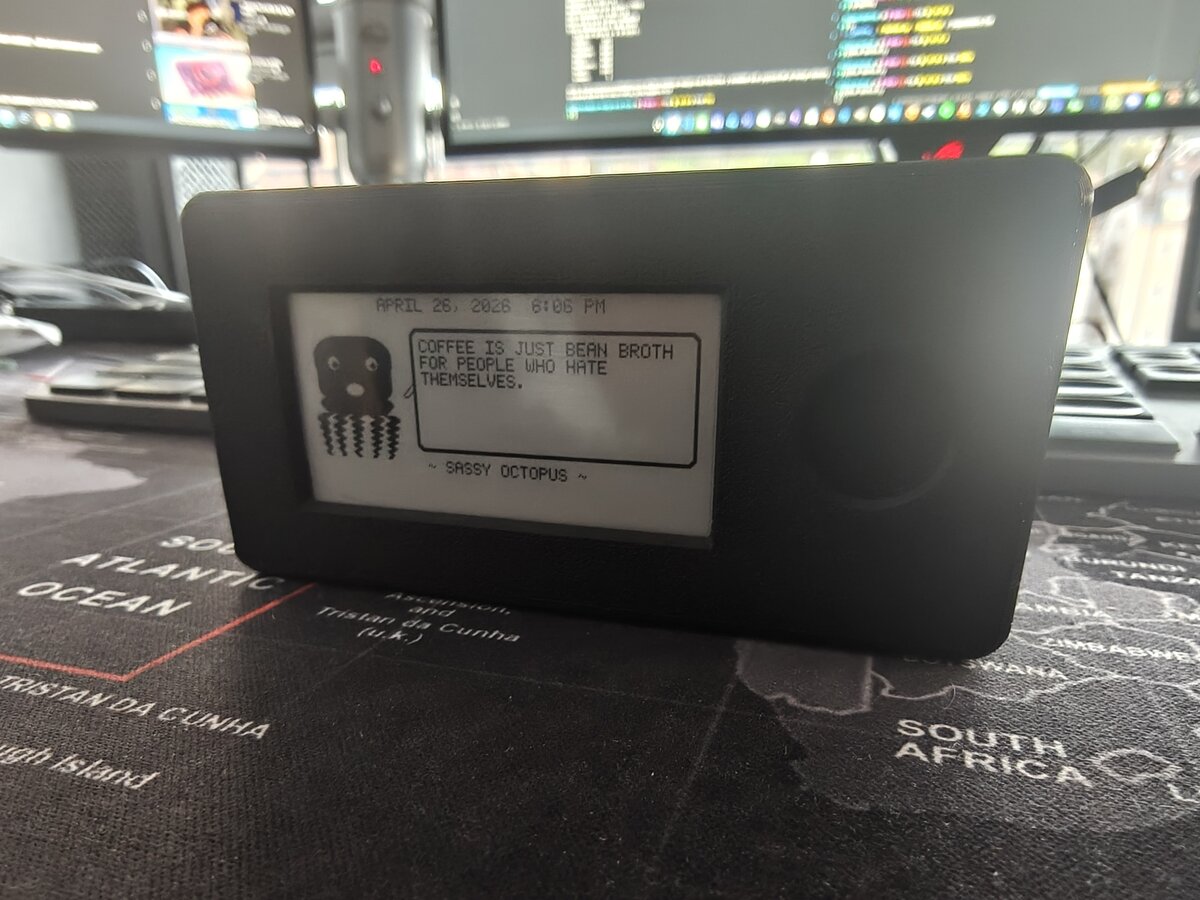
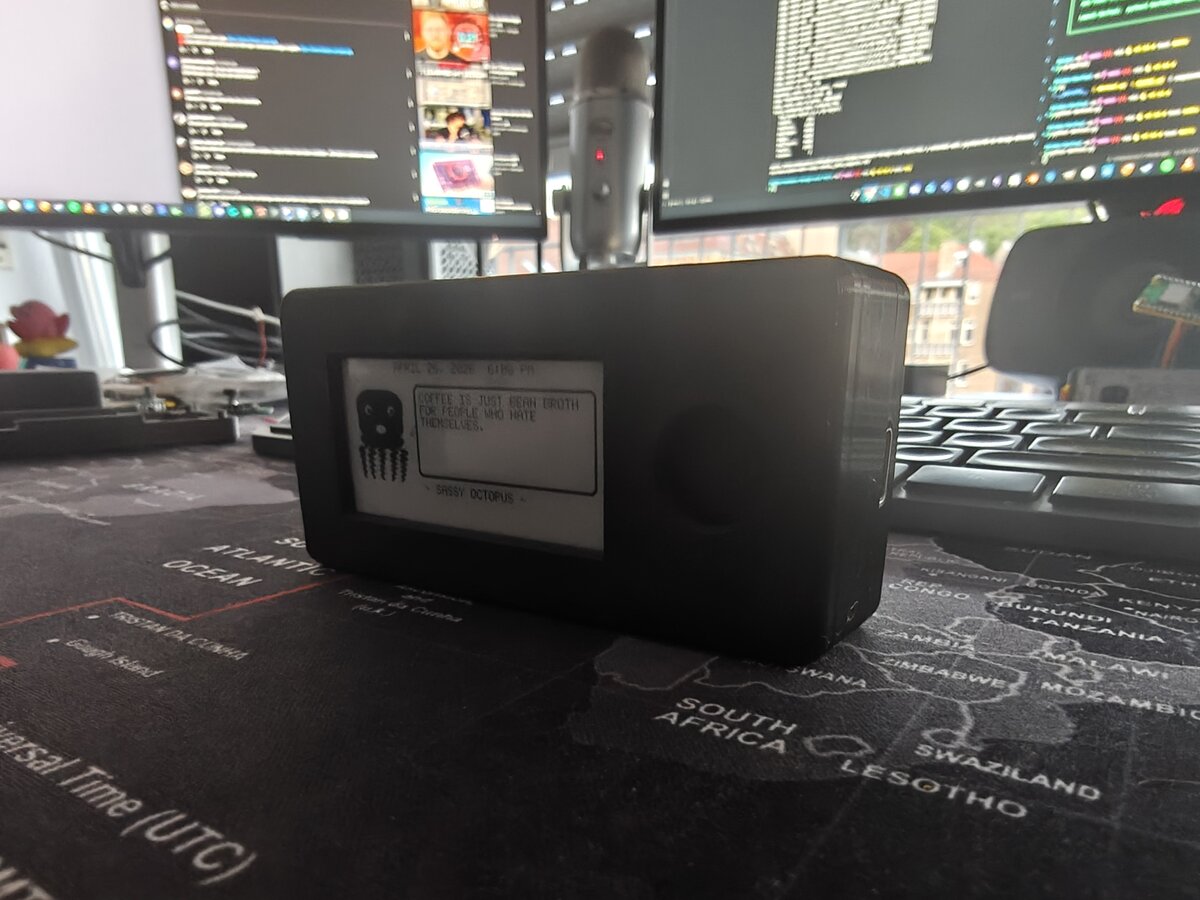
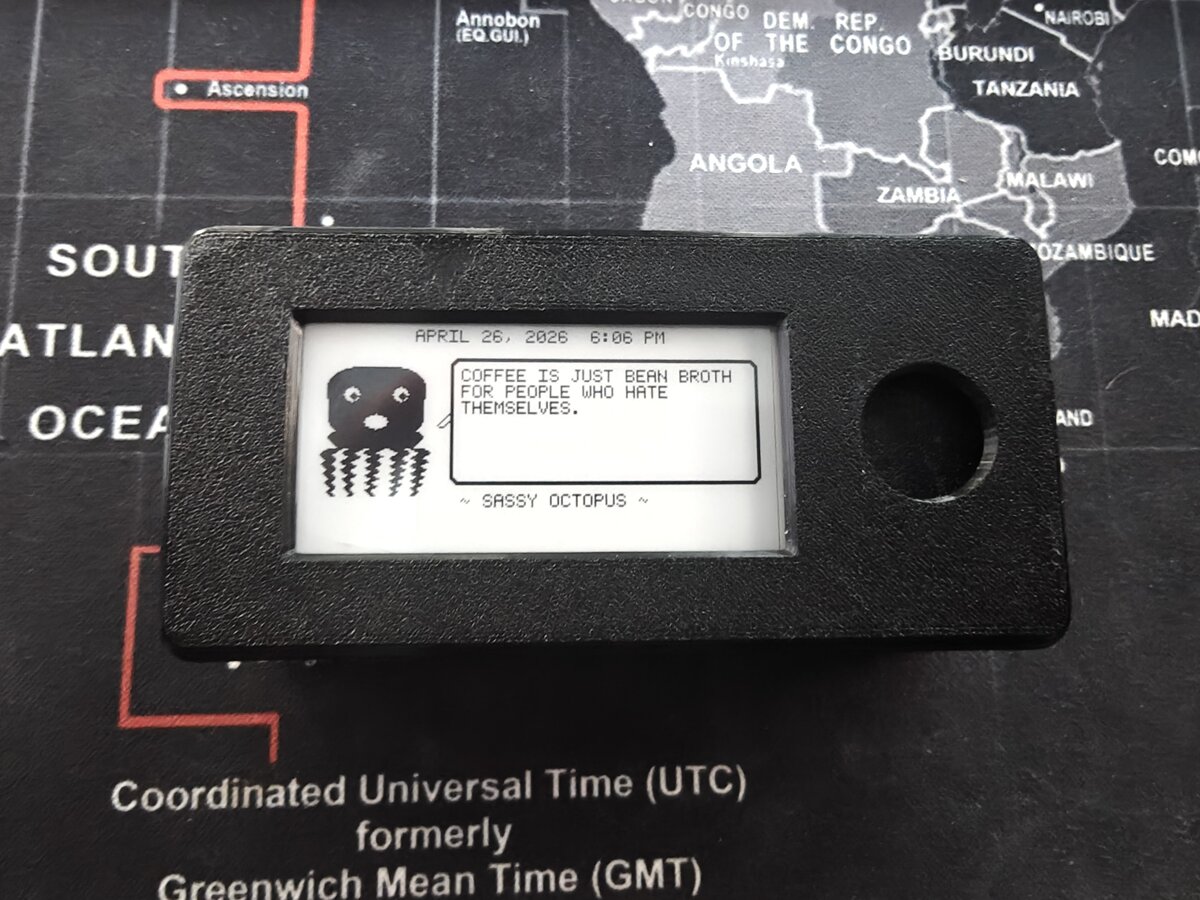
Display Close-Up
The 250x122 e-ink display showing the RTC clock header, animated octopus sprite, speech bubble with quote, and tagline. All rendered in firmware — no PC connection needed.
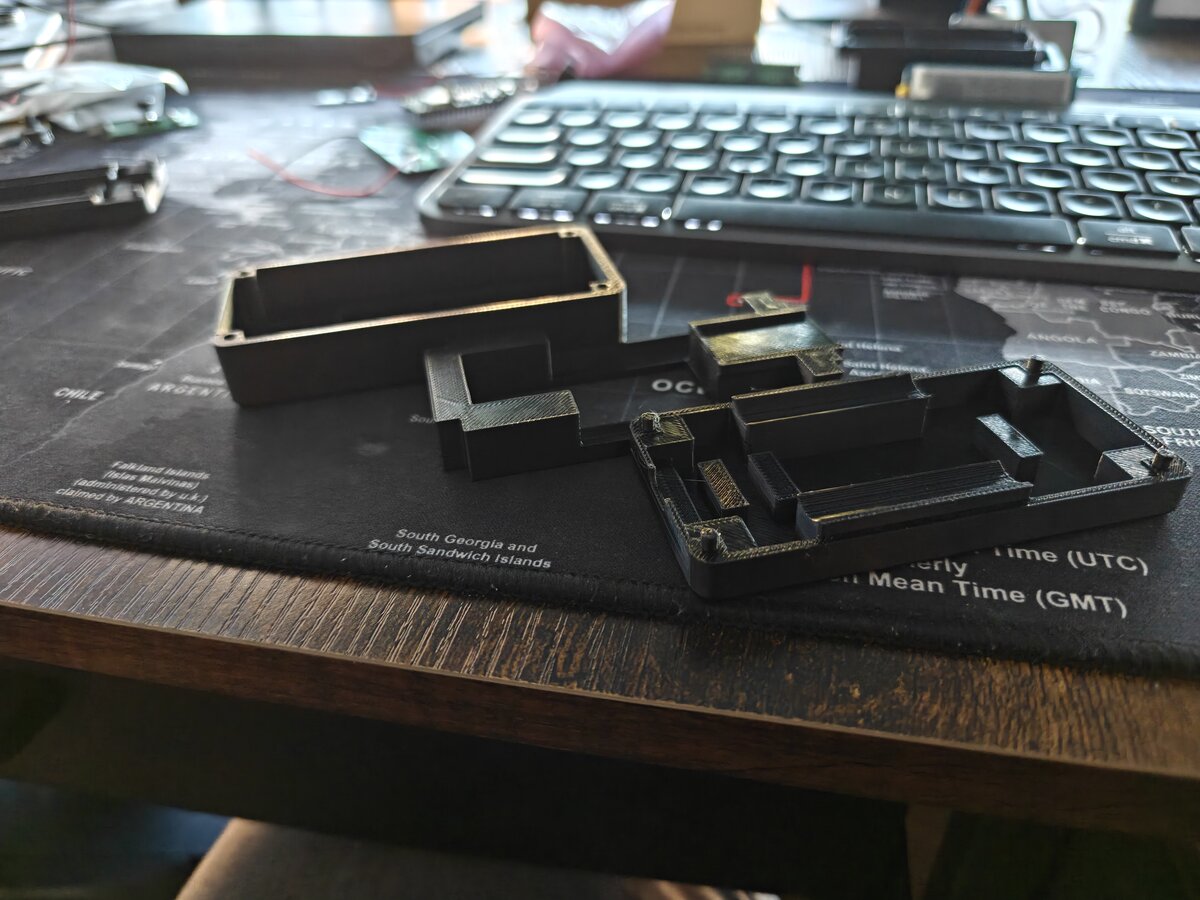
Case Parts
Top cover with display window inlay and joystick port, base plate with solar panel cutout, and battery cradle insert.
DevTool Integration
Select "Pico 2 W (RP2350)" from the board dropdown and everything adapts — flash utility shows RP2350 drive detection, builds use the correct CMake flag, Docker passes PICO_BOARD=pico2_w, documentation and connection wizard text all update dynamically.
What's Next
- Test all 16 octopus personalities on Pico 2 W
- Joystick PCB integration with the K1-1506SN-01 switch
- Solar charging evaluation with the AK 62x36 panel