First 3D-Printed Enclosure Prototype
The parametric OpenSCAD enclosure design has made the jump from screen to plastic. First FDM prints are off the bed and components are fitting together.
From CAD to Real Parts
The ESP32-S3 enclosure started as a single monolithic .scad file and has been broken out into standalone parametric parts, each iterated through multiple versions:
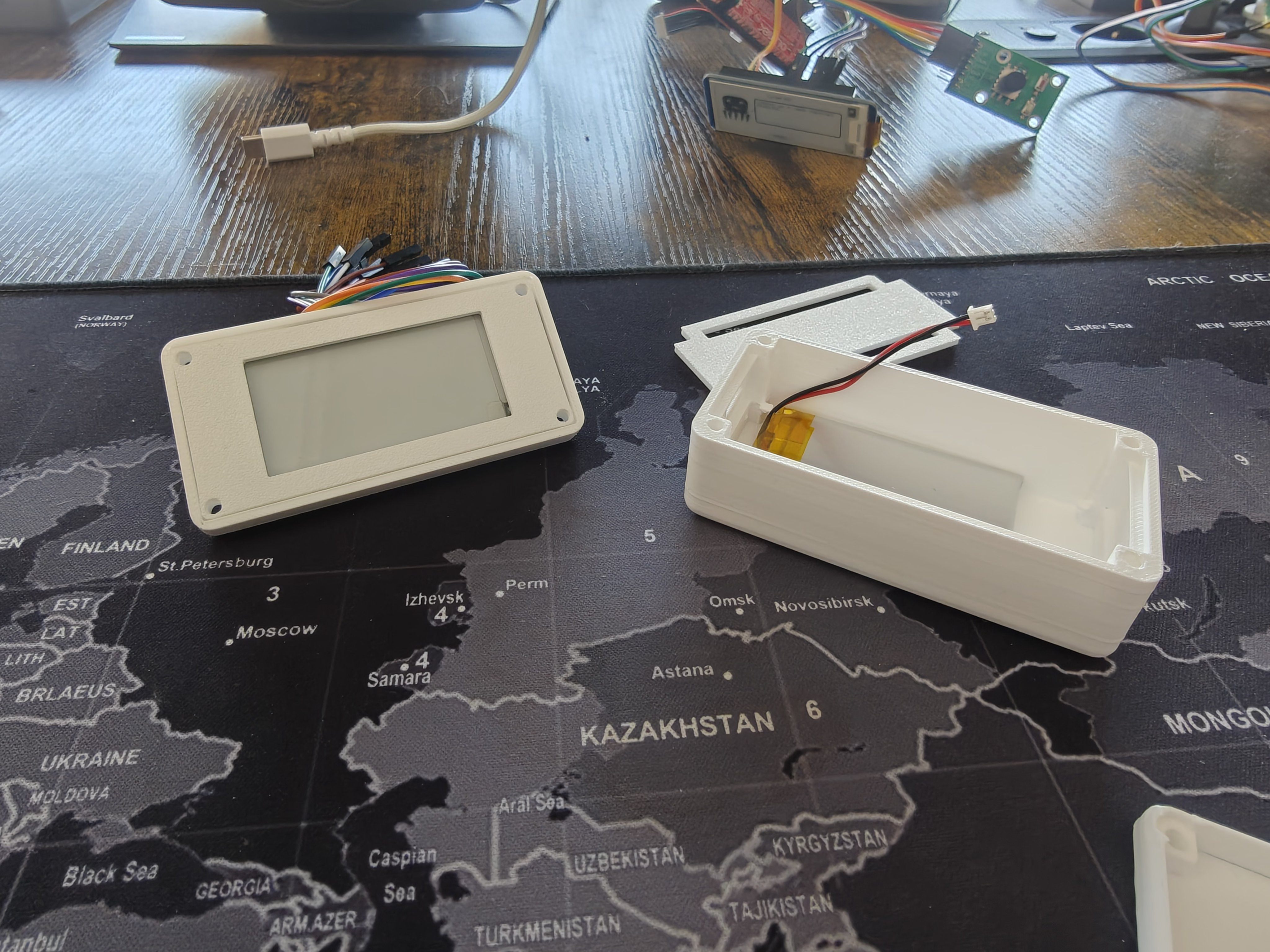
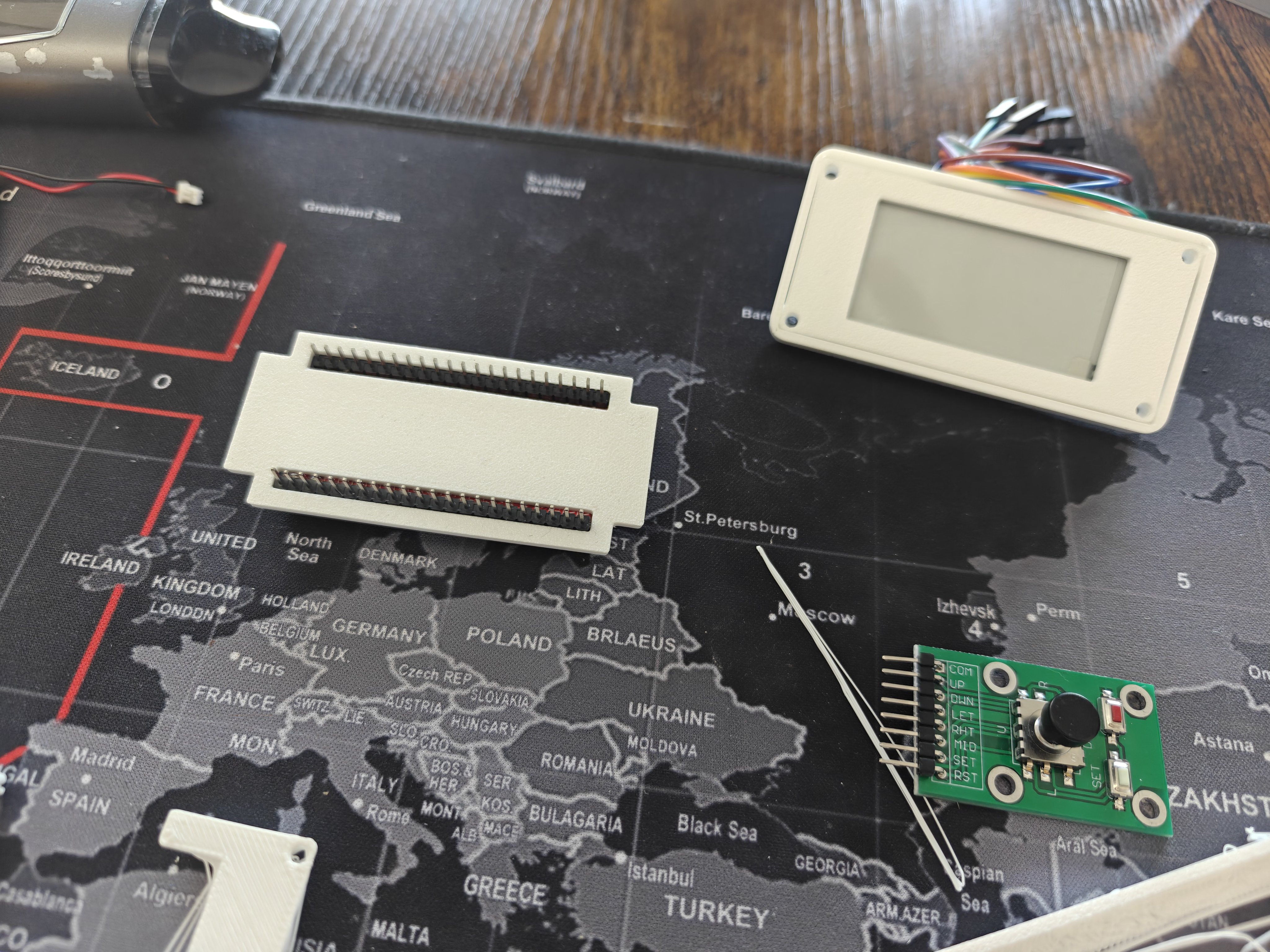
- Middle plate (board tray) — v2 with 56.5mm header slots, centered on the plate
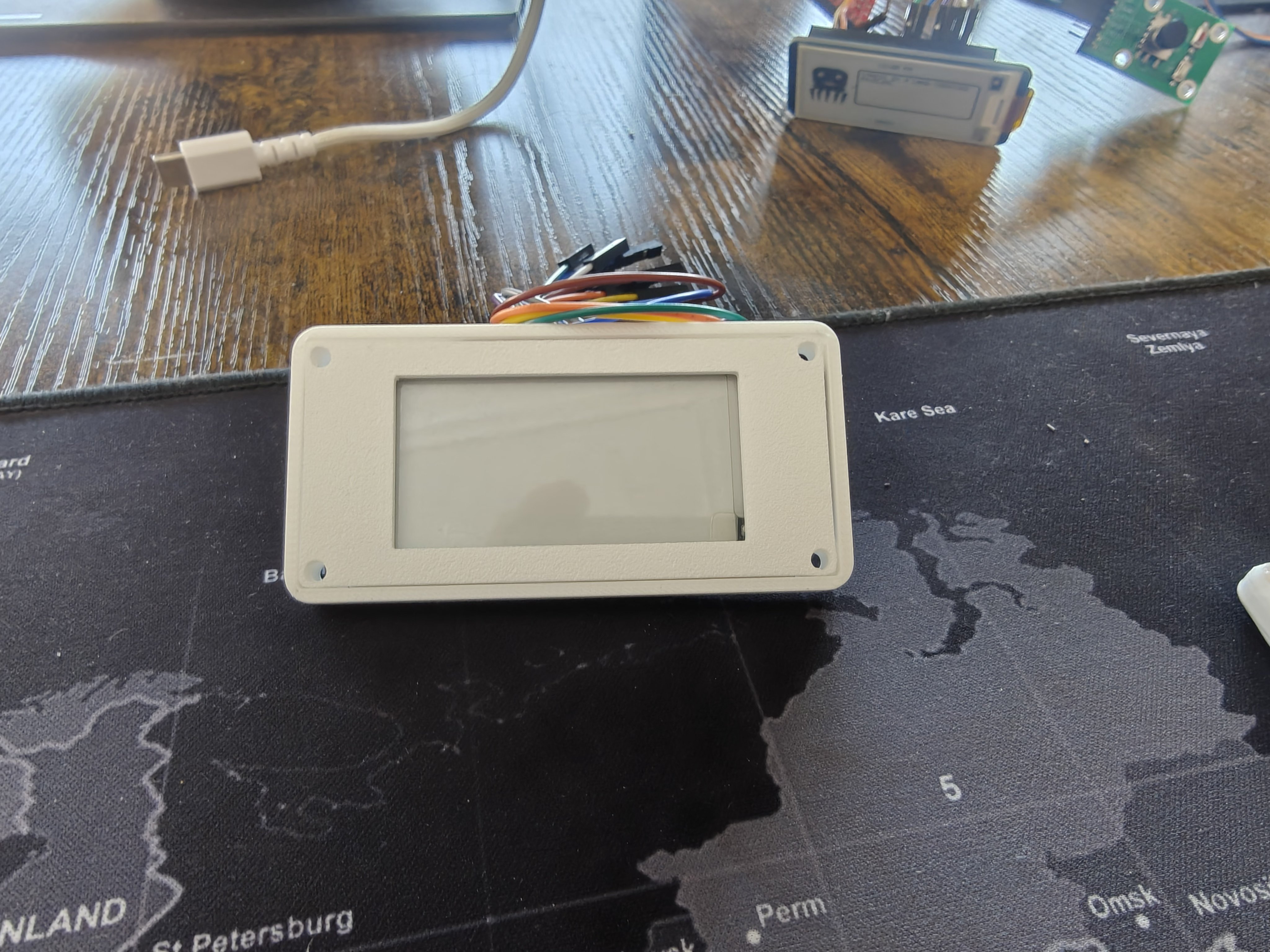
- Top plate windowed (display cover) — v1 with solid face, snap-fit retaining rails, and printable full-width lips
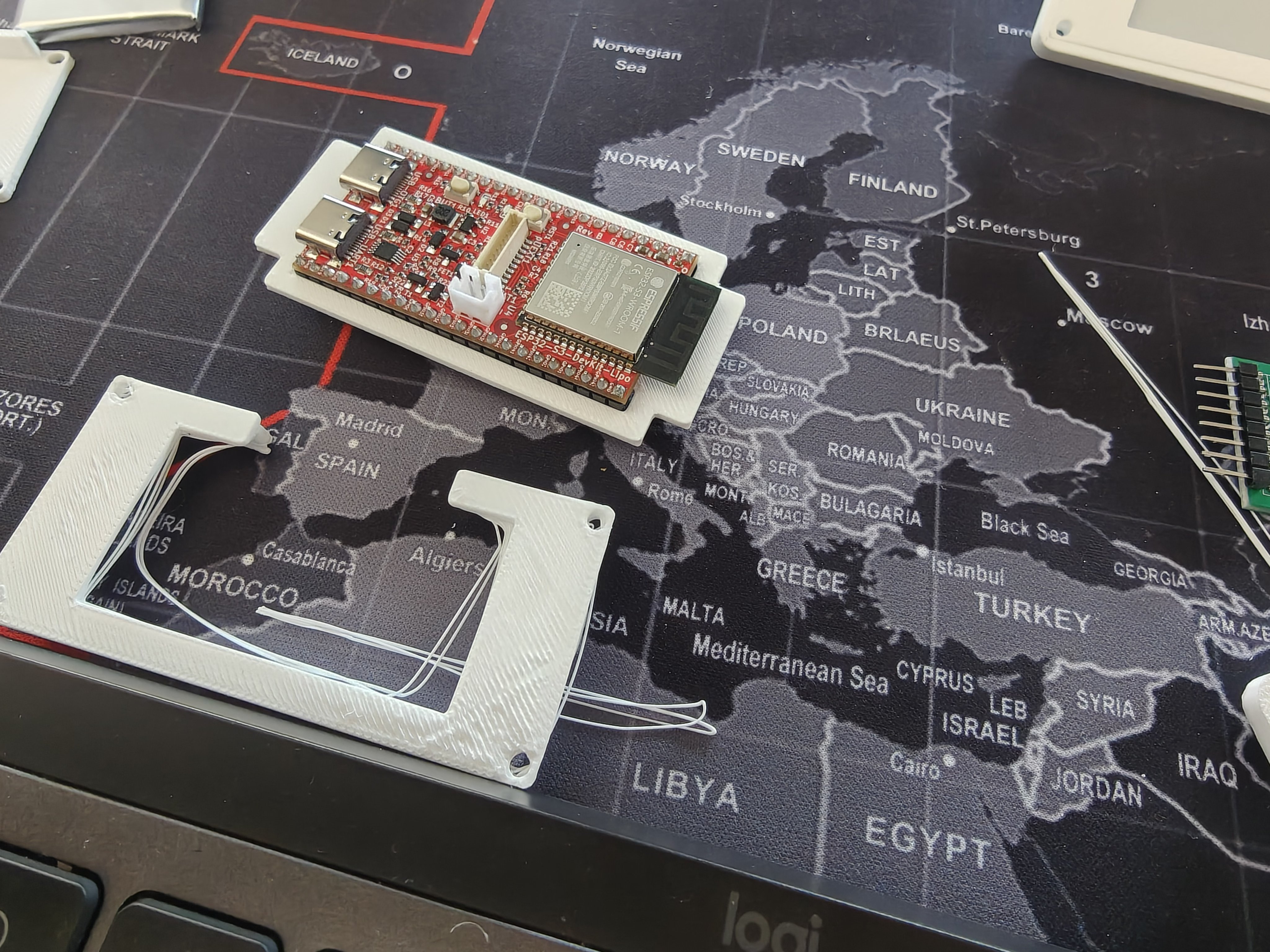
- Top cover frame — v3 with rounded inner corners, single-corner-rounded pillars, and countersunk pockets for flush plate seating
- Case separators — inner and outer divider sheets with header pass-through slots
Assembly Test
The stacked shell design works as intended. The LiPo battery drops into the base chamber, the middle plate rests on the lower shelf with the ESP32-S3 board's headers passing through the clearance slots, and the display cover snaps in over the Waveshare e-ink display.
Component Fit Check
All printed parts laid out alongside the electronics — the Olimex ESP32-S3-DevKit-Lipo, Waveshare 2.13" e-ink display, joystick breakout board, and 1000mAh LiPo battery.
What's Next
The current prints identified a few fit issues that drove the v2 and v3 iterations of the top cover — rounded inner corners and single-corner-rounded pillars so the windowed plate slides in without catching. The parametric design makes these changes fast: tweak a variable, re-export, reprint.
Next up: finalizing wire routing, testing snap-fit retention under repeated assembly cycles, and exploring the rounded-top cover variant for a more polished exterior feel.
All source files are in hardware-design/scad Parts/ and the full design history is on the Design Evolution page.